 Admissions
  Financial Aid
 Academic Divisions
 Academic Support Resources
 Learning Commons
 Academic Calendar
 Program Search
 Course Search / Information
 Online Learning
 English Language Learners
 Municipal Police Academy
 Beyond Associate Degrees
 Cooperative Education & Internships
 Academic Advising
 Act 101 Program
 CARE Team
 KEYS
KEYS New Students
 Parenting Students Resources
 Transfer and Articulation
 Student Employment Services
 Student Records
 Student Resource Center
 Athletics
 Campus Life
 Commencement
 New Student Orientation (NSO)
 Online Classes
 Professional Development
 Community Education
 Training & Certification
 Alumni and Giving
 New Students
 Prospective Students
 Parents & Family
 Veteran and Military Services


Online and Hybrid Learning at DCCC Are More Popular Than Ever
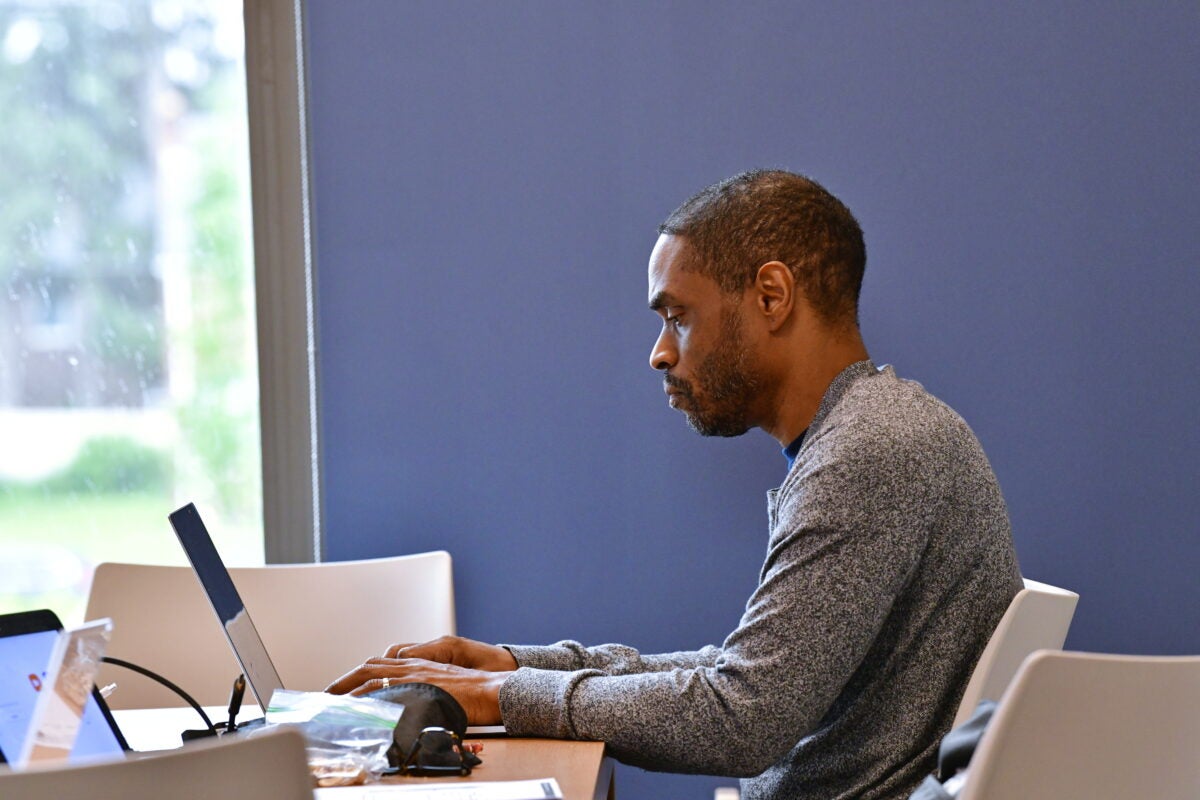
Which of Delaware County Community College’s branch locations would you guess serves the most students each year?
If that sounds like a trick question, that’s because it is.
The surprising answer is that most students access DCCC class offerings online, through the College’s online and hybrid learning options. As of 2023, online classes account for 52% of all courses taken at DCCC.
Online learning has been steadily on the rise at DCCC since the COVID-19 pandemic made online learning a necessity, says Alex Plachuta, Assistant Dean of Online Learning.
DCCC has embraced this shift in modality, opening the door to educational opportunity for community college students, who now range from high school dual enrollment students to traditional college-age students, to adult learners. Virtual lectures, interactive assignments, engaging online discussions, and timely email correspondence with instructors all provide invaluable flexibility.
And for an increasing number of DCCC students, it is now possible to earn a certificate or even an associate’s degree largely or entirely online. DCCC boasts 18 degrees and 8 certificates that can be earned at least 90% through online courses.
In-Demand Programs for In-Demand Careers
The College’s online and hybrid associate degree offerings include programs that can prepare students for careers in fast-growing industries like healthcare, computer science, early childhood education, and medical coding and billing.
Certificate programs in career fields like Early Childhood Director, Human Resource Management, and Medical Coding and Billing allow students to pivot to new fields, or simply “upskill” to build on prior experience by earning the types of credentials that are sought in the workplace.
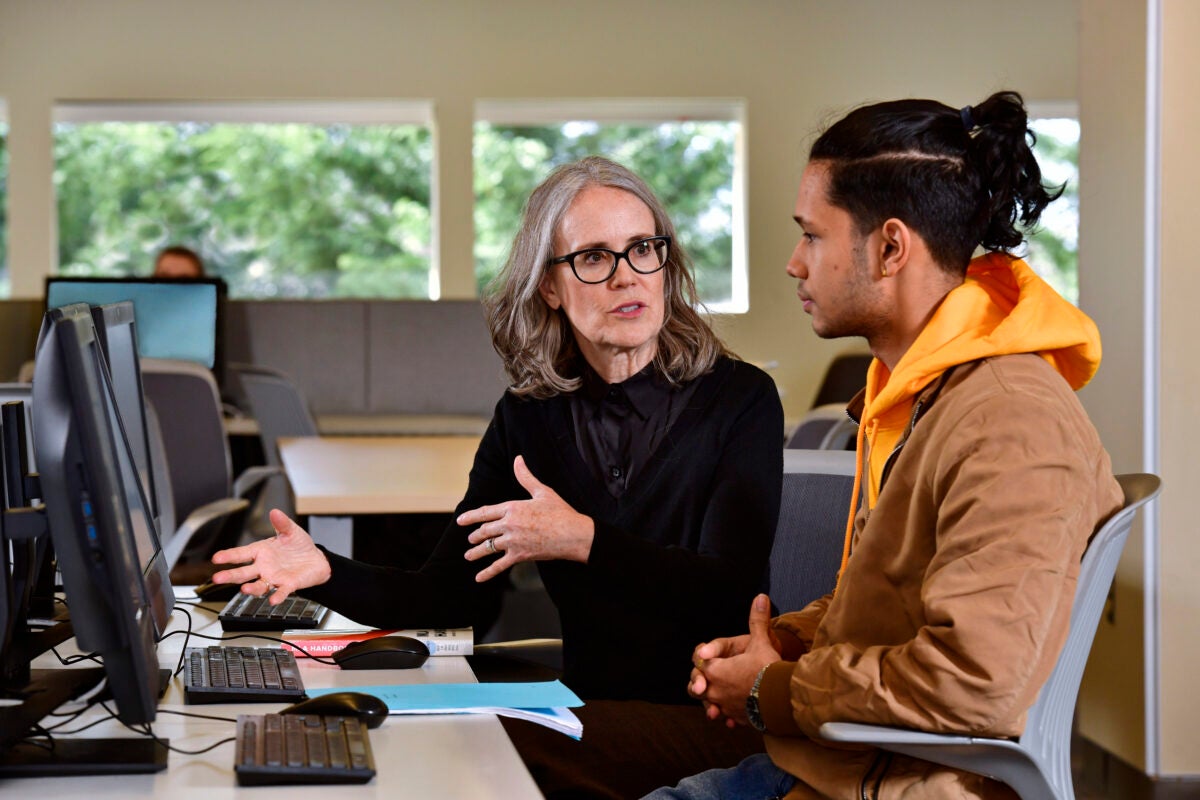
The list of online and hybrid programs available also includes popular DCCC majors like Communication Arts, Political Science, and Psychology. Certificates like Artificial Intelligence offer established professionals the chance to sharpen and update their skills, while new programs like the College’s Trauma Studies certificate allow students to explore emerging cultural topics that cut across disciplines.
Matching the Varied Needs of the College Community
“Many of our online classes are asynchronous,” Plachuta points out, giving students the flexibility to watch lectures and complete assignments somewhat on their own schedule. “For a lot of people who work, or who may have children, it’s much more convenient to devise a weekly schedule that gracefully incorporates all of their responsibilities, including work, family and now, education.”
He recalls a student who is a parent, who’d schedule a “movie night” once a week. While her children watched a movie in one room, she would go to another room to watch lectures online.
While the benefits of online and hybrid learning match up with the needs of working students, online learning is also a terrific fit with dual enrollment students. DCCC’s program allows high school students to earn college credits while still in high school. (And some students have even earned an associate’s degree before receiving their high school diplomas.)
“I spoke with one high school student who took three classes during our Winter session,” Plachuta says. “He knocked all three out of the park and the commitment this student displayed was exemplary, showcasing his seriousness and commitment to higher education.”
Hybrid Learning Is Flexible Learning
DCCC’s hybrid learning options provide a terrific mix of convenience and hands-on learning, Plachuta points out.
“Not everything that DCCC offers can be taught entirely online,” he says.
For courses with a significant amount of hands-on learning, hybrid classes maintain flexibility without sacrificing the experience of learning with peers that happens in the laboratory or classroom.
Where an in-person class might require a student to attend a 90-minute class on both a Tuesday and a Thursday evening, a hybrid class would condense that time into just a Thursday-evening session focused on hands-on experience, with the opportunity to seek out individualized instruction from the teacher.
“Hybrid is the best of both worlds,” says Plachuta.
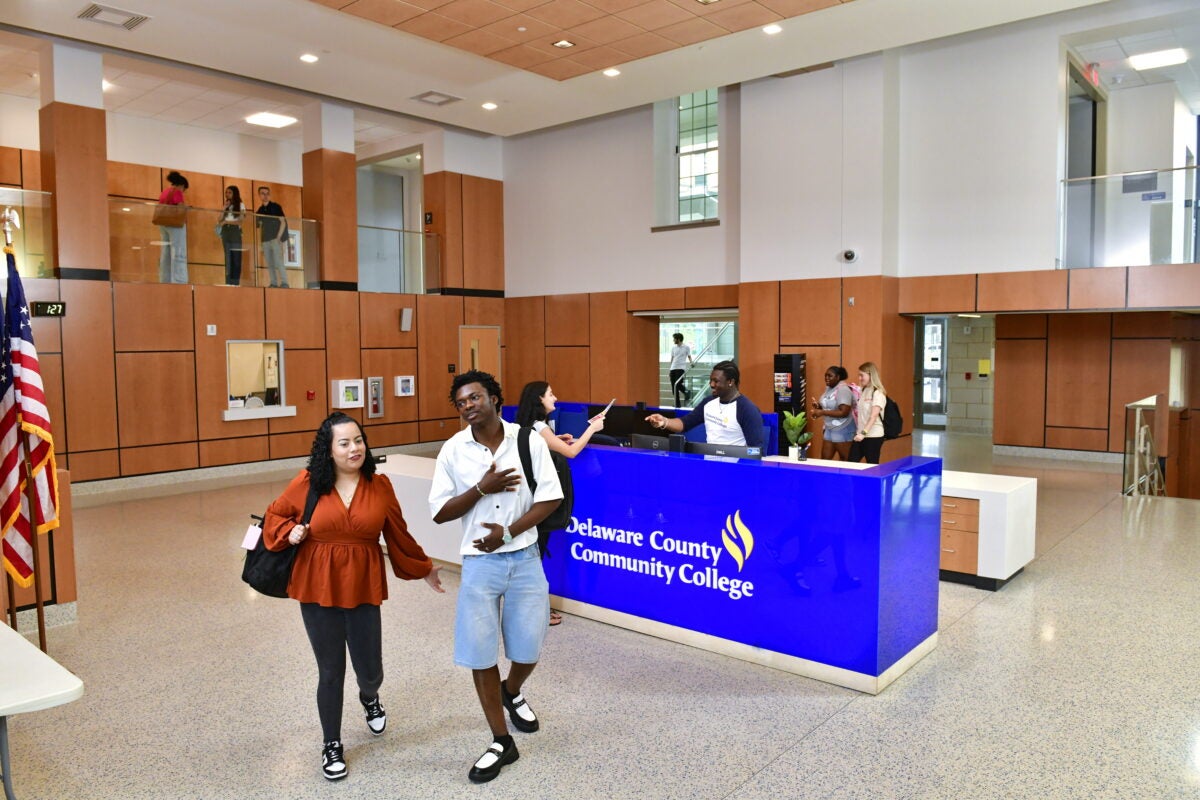
The convenience of hybrid learning is enhanced by DCCC’s three main locations: students can fulfill the in-person requirements by registering for hybrid courses at the Marple Campus, Downingtown Center, or the Southeast Center.
Transferring Smoothly
The College has agreements with over thirty four-year institutions that accept most, if not all, DCCC credits earned both in person and online. In some cases, students can move seamlessly between online learning through the College and virtual learning at a majority-online institution such as Southern New Hampshire University.
Locally, universities including West Chester University, Wilmington University, and Temple University are frequent transfer destinations for students earning associate’s degrees via DCCC’s online offerings, further demonstrating that students can start at DCCC and then go on to earn a bachelor’s degree from almost any college or university in the United States.
“Students have many more transfer options these days,” says Plachuta, “as they do not have to follow traditional paths of staying local, and so their options are virtually limitless.”
By the Numbers
The data behind the rise of DCCC’s online offerings tell the story of an institution adapting to meet the needs of a community eager for education and the opportunities it brings.
- For the recent summer 2026 sessions, Plachuta estimates that 70% of DCCC classes were online for the accelerated 6-week “Summer I” session, with that number rising to 80% for the “Summer II” session. Over 300 sections are available to students entirely online.
- The College’s Winter term is 100% online. These classes are shorter and more focused, and the online-only format gives students a chance to earn credits in an intense but quick 4-week term, continuing their progress toward degree or certificate completion.
- DCCC’s online students put the distance in distance learning. While classes are taken mostly by students in Pennsylvania, Delaware, and New Jersey, the 2025 online classes attracted 243 students from 34 different states.
A History of Accessibility
Here’s another question: how long has Delaware County Community College been offering classes virtually?
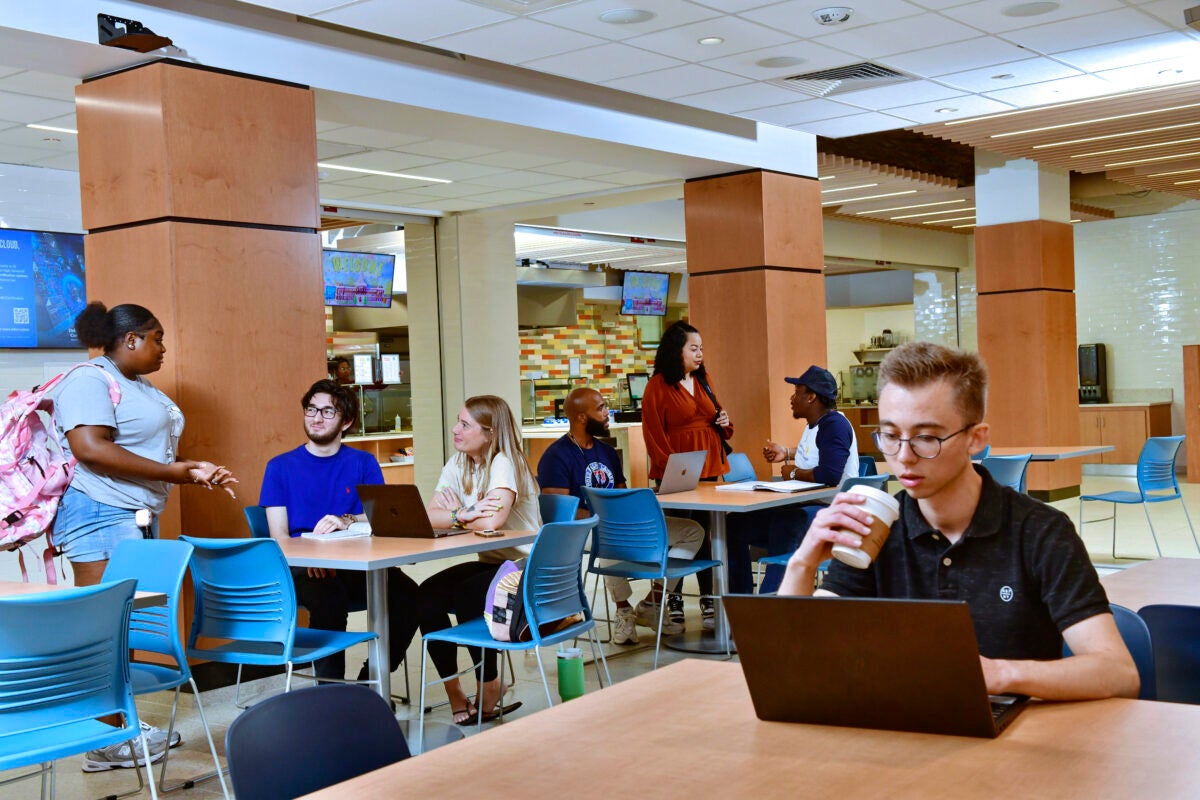
If you guessed since 2020, or even 2010, you’re not even close.
“This all got started in the fall of 1998,” says Plachuta.
Back then, no one was taking classes through Zoom or watching lectures on Canvas. Instead, lectures aired on public television station WHYY, often after midnight. Students completed assignments in response to those lectures, often mailing in their work or dropping it off in the professor’s office. For students who missed the lectures, the College had VHS copies of the videos available.
When Plachuta was hired at DCCC in 2003, after attending the college in the early 1990s, part of his job involved videotaping professors delivering lectures. Often he had to book a room, secure a video camera, and then convert the video footage into an MP4 file that could be shared online.
“It used to be much more time-consuming,” Plachuta says. “Developing course content is now relatively easy, with webcams, mics, screen recorders, etc.”
In those days, it would have been difficult to imagine how readily accessible courses and even full degree programs would someday be—or how ordinary it would become to attend college without leaving home.
“Online learning has followed the same path as other societal shifts like shopping and banking,” says Plachuta. “Like both of those, online learning is only going to grow and adapt to better serve the people through flexibility and efficiency.” DCCC has been there every step of the way.